
JURY VERDICT: Winter Haven woman charged with murder, sentenced to life

Star Tribble shot her sleeping boyfriend in the back of the head and left his body on top of their mattress.

Star Tribble, 36, of Winter Haven.

A jury found Tribble guilty Oct. 31 of first-degree murder, tampering with a witness, tampering with physical evidence, assisted tampering with evidence and false report of a crime. Immediately following her conviction, she was sentenced to life in prison.

Assistant State Attorney Kristie Ducharme told jurors evidence showed that Tribble killed Tomorreio Clark in the early morning hours of Feb. 19, 2016.

Their daughter, Damecia Stephens, came home after her shift ended at midnight, and Clark was alive. Stephens said there was no arguing between her parents and that everything appeared normal.

Stephens went to sleep shortly after getting home and was woken up by a loud boom. Minutes later, Tribble came into her bedroom, telling her to pack bags for herself and her two little brothers so all of them could leave.

Tribble, Stephens and her two little brothers all left their Winter Haven home and checked in to a hotel a few miles away.
On Saturday morning, they pick up Tribble’s friend in Cocoa and drive to the Walton County Correctional Facility in Defuniak Springs.

While stopping at a gas station, Tribble hands Stephens a bag and tells her to throw it away. Stephens later told law enforcement that while she did not look in the bag, she noticed that it was a heavy metal object about 8 inches in length.

Tribble picks up her friend, and they all check into a hotel in Walton County. The two visit their boyfriends in prison and then leave to drop Tribble’s friend off and drive back to Polk County.

They arrive at Tribble’s brother’s house in Lakeland early Sunday morning.

Tribble has her kids unpack the trunk as she tells her brother, Kenneth Stacy, that she needs help moving something. She never told him where they were going, but upon returning to her house, she pointed at the bedroom and told Stacy, “He’s in there.”

Stacy went inside to find Clark’s body and immediately confronted Tribble asking her why she didn’t call the police. She told him the police would have asked too many questions, but that she “shot him in the head” because she was sick of him jumping on her.

She asked Stacy to help her move Clark’s body, but he refused. The two drove back to Stacy’s house that evening and didn’t speak about it again.

The next morning when Stephens was getting ready to leave Stacy’s house to go to class, she told her mother she’d forgotten her book at home. Tribble handed her a key to the house and said, “He’s gone.”

Stephens found her father’s body when she got to the house, and she immediately called 911.

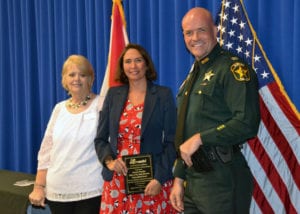
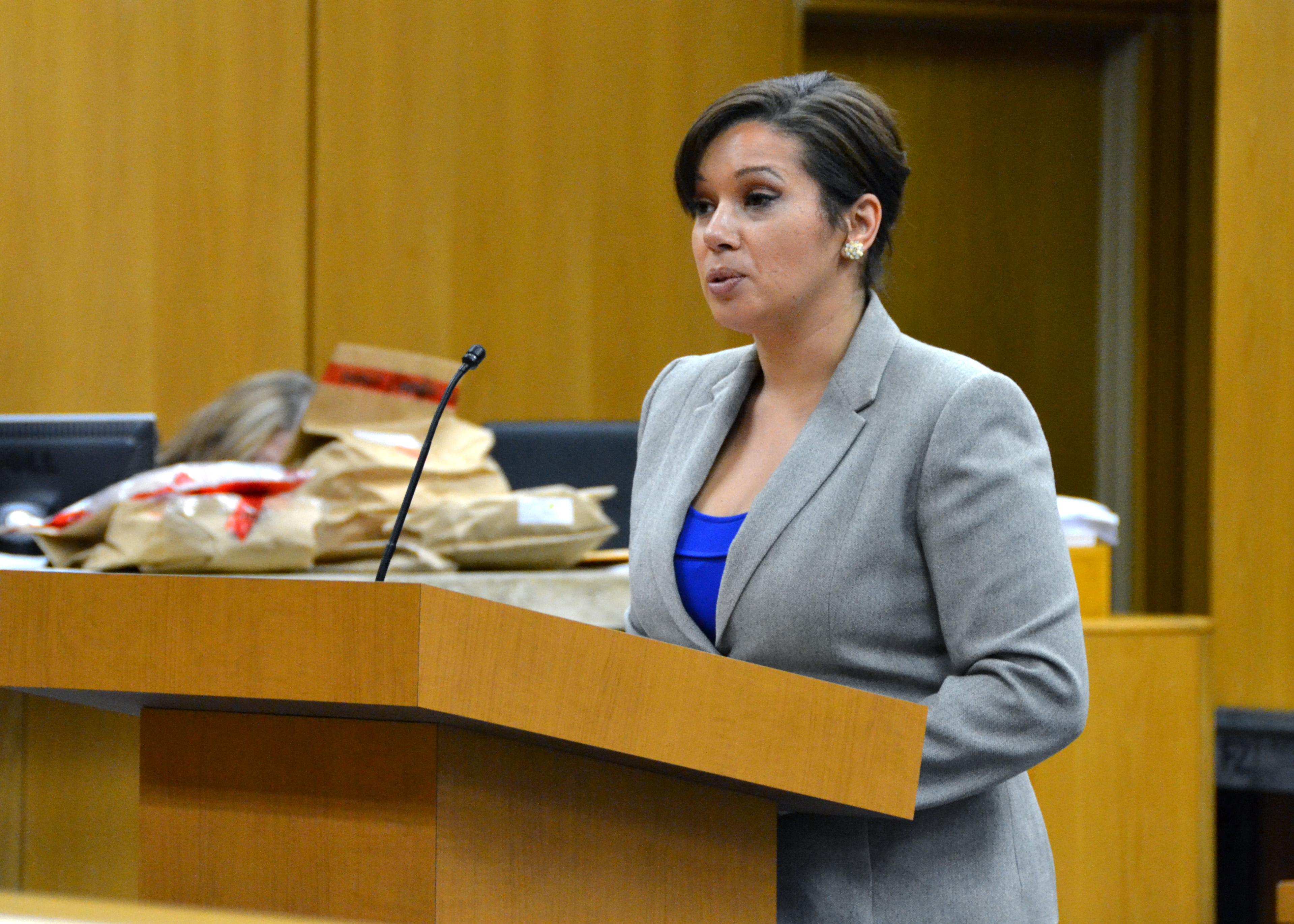
Assistant State Attorney Kristie Ducharme. (FILE PHOTO)

Ducharme told jurors that in Tribble’s first interview with law enforcement, she lied. Tribble also told Stephens and her two younger brothers they had to lie to law enforcement as well.

When Stacy was interviewed, he tried to minimize the situation. He didn’t tell detectives that Tribble asked for his help moving the body or that she confessed what she’d done.

Law enforcement knew their stories weren’t adding up, so they interviewed Stephens and Stacy again. They both came clean and told the entire story.

The defense argued that Stephens’ and Stacy’s testimonies could not be trusted because they lied to law enforcement initially.

Ducharme reminded the jurors that the reason they lied was because Tribble threatened them.

“Yes, they lied at first,” she said. “but there was a reason. They consistently gave the same story after that.”

Ducharme also told the jury that Tribble wrote a letter to Stephens before trial started, asking her to change her story and tell police she’d lied in her second interview and then destroy the letter. Ducharme asked them to combine Stephens’ and Stacy’s statements with all of the evidence, especially the ones showing Tribble was tampering with multiple witnesses, which left no reasonable double that Tribble was the one who killed Clark.

As for why Tribble killed Clark, Stephens said while she had witnessed physical violence between her parents when she was a child, she had not witnessed physical violence between the two leading up to the murder. However, in jail phone calls between Tribble and her boyfriend in the Walton Correctional Institution their conversations allude to them having discussed killing Clark in the past.

Tribble’s coworkers said he was getting out of prison a month later, and Tribble kept telling them she was going to leave Clark to be with him.

SENTENCING UPDATE: Taekwondo teacher sentenced to 15 years for molesting student

Chase Woolman began making sexual advances toward his victim when she was only 14-years-old.

Chase Woolman, 28, of Lake Wales.

Woolman sexually abused her for three years, taking advantage of the student-teacher relationship he had with her. Woolman was convicted of sexual battery and lewd molestation Friday and was sentenced to 15 years in prison, followed by 15 years of probation.

The girl had been a student at Woolman’s taekwondo school since she was 8, and the abuse began while she and other students were at a taekwondo training in 2010. Woolman started by simply touching her inappropriately, but their interaction eventually led to intercourse.

On a controlled phone call with law enforcement, Woolman admitted to having sex with his student and said he was “concerned every day the police were going to show up” and take him to jail. The victim told Woolman she felt that because he was in a leadership role in her life, she thought she could trust him.

Woolman apologized to the girl for breaking that trust.

SENTENCING UPDATE: Man who stalked young girls, flashed them sentenced to 10 years

After being fired from a job where he allegedly flashed a young girl, Adam Tharp spent his spare time stalking children at libraries in hopes of exposing himself to them.

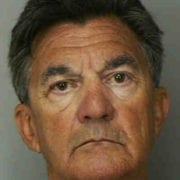
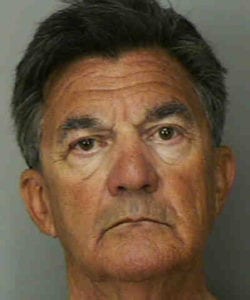
Adam Tharp, 24, of Winter Haven.

Tharp, 24, of Winter Haven, pled guilty to lewd or lascivious exhibition Friday. He was sentenced to 10 years in prison, followed by 15 years of probation, by Judge Abdoney, who said Tharp’s actions were “alarming.”

The first reported incident was in May 2015 when Tharp was working at an auction house. A little girl went to the concession stand to get Cheetos and Pepsi, and she said Tharp turned around to face her with his genitalia out.

The child immediately ran back to her mother and told her what happened. Tharp claimed that the girl saw his finger and nothing else, but he was fired shortly after.

A year later, in May of 2016, Tharp began frequenting libraries in Polk County, specifically in Lakeland and Winter Haven.
Assistant State Attorney Ashley McCarthy said he would walk through the aisles of the children’s section and peek through the bookshelves to find little girls who were not with their parents. Evidence showed that Tharp crouched down and showed himself to at least one girl at the Winter Haven library.

Security footage from both libraries caught Tharp stalking little girls. Tharp admitted it was him in the video and told detectives he has a desire to expose himself to young girls.

JURY VERDICT: Carter convicted of first-degree murder for fatal home-invasion robbery

It only took jurors two hours at the end of a four-week trial to find Auban Carter guilty of first-degree murder.

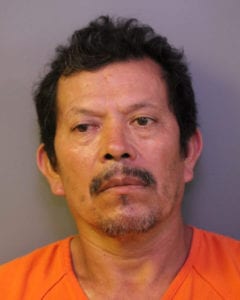
Auban Carter, 27.

Carter was involved in a 2015 home-invasion robbery that resulted in the death of Kody Zawalski. Two others were critically injured in the incident, and a fourth victim was struck.

Carter was convicted Friday and was immediately sentenced to life in prison with no parole.

Levi Atkinson, who was shot and paralyzed during the shooting, told jurors what happened on January 11, 2015.

He and eight other friends were hanging out at their home when two armed gunmen came into the house demanding drugs and money. Atkinson was in the shower when Carter and his co-defendant entered the home, but he heard his brother’s voice and could tell something was wrong.

When Atkinson came out of the bathroom, he saw two men wearing bandanas over their faces – one was holding what appeared to be an assault rifle, and the other had a handgun. He told the gunmen that they didn’t have anything as his younger brother Tommy handed them a backpack.

That’s when a warning shot was fired.

“The reality of it set in,” Atkinson said, recalling that his ears were ringing. “They were actually about to shoot us.”
Atkinson told jurors that he was standing at the end of Carter’s rifle, with it pointed directly at him. Carter’s bandana mask was no longer covering his face, and Atkinson saw his face.

Carter tried to hit Atkinson with the butt of the gun, and then another shot rang out.

“That’s when Tommy got hit. He got shot in the chest,” Atkinson said.

He tried to push Carter out of the room, placing his left hand on Carter’s chest and pushing until he was through the front door. But when Atkinson turned around to run toward his brother, he heard another shot.

“I hit the ground so fast,” Atkinson said. “I instantly couldn’t feel my legs anymore.”

One of Atkinson’s friends picked him up and carried him out of the house as Carter continued to shoot at his friends – he heard at least 10 extra shots. As he was carried out, Atkinson saw his brother grasping at his wound and Zawalski lying on the kitchen floor.

Assistant State Attorney John Waters told the jury that there was a lot of circumstantial evidence linking Carter to the murder of Zawalski.

Assistant State Attorney John Waters addresses the jury. (File Photo)

Carter was found in possession of the murder weapon and similar bullets four days after the shooting, and his cell phone was located in the area of the crime at the time it occurred. His cell phone data was extracted, and it shows that Carter accessed multiple news websites right after the shooting.

“The history showed he’d never once accessed any type of news source,” Waters said.

His co-defendant also testified that Carter took part in the robbery and shot and killed Kody Zawalski.

Five of the victims all identified Carter in court, but the defense claimed that they were lying and colluding with each other. The defense even called in an expert witness to prove that point.

But Waters told the jury that two of the victims were inches away from Carter. Atkinson echoed that during his testimony in court.

“I am 100 percent, 1,000 percent positive that’s him,” Atkinson said, choking up. “I can’t forget that. … I think about his face all the time.”

In closing arguments, Waters reminded the jury about how Carter searched news sites for any mention of the shooting shortly after he committed it.

“You never look at the news and then all the sudden do hours after the murder, and you’re found in possession of the murder weapon,” he said. “There’s no logical inference anyone but the defendant did it.”