
JURY VERDICT: Lake Hollingsworth attacker convicted of kidnapping, attempted sexual battery
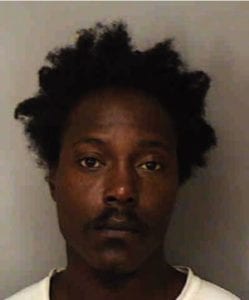
William McGee, 39, of Lakeland.

William McGee admitted he could have raped his victim if she hadn’t talked him out of it.

The 22-year-old girl was running around Lake Hollingsworth about 11 p.m. May 18, 2015, when she saw the shadow of a man begin to approach her from behind.

“He was coming up behind me fast. I glanced back and smiled at him,” the victim said in court Thursday, noting that he wasn’t wearing shoes or a shirt. “I wasn’t worried anything would happen.”

As McGee’s shadow neared, the girl moved to the right so he could pass on her left.

The victim felt his arm slip around her neck and his hand cover her mouth, and that’s when she realized he wasn’t there to run the lake. He was there to hurt her.

McGee was found guilty Friday of kidnapping and attempted sexual battery. He faces up to life in prison and will be sentenced March 24.

Assistant State Attorney Jaenea Gorman told jurors McGee confined the victim for 49 minutes after pulling her off the running path.

“He wasn’t out there jogging. He was in his socks,” Gorman said Friday. “This wasn’t somebody who was out there to run. This was somebody who saw an opportunity, pursued a girl and attacked her.”

“Why are you out here this late? You deserve this,” McGee yelled at her while forcing her into a wooded area and then to the ground, where he attempted to remove her shorts.

The victim fought to keep him off of her, pleading with him to not hurt her. When she realized she wasn’t strong enough to overpower him, she changed tactics and began to reason with him.

“I knew that I wasn’t going to live if I kept fighting him,” the victim said. “I thought that if I could get inside his head and use sympathy maybe that could work.”

McGee admitted to law enforcement that she asked him not to hurt her and that she was crying.

“I knew she was afraid for her life,” McGee said in a taped statement played in court. “I already knew she was trying to get free.”
He also admitted that he could have raped her if she hadn’t calmed him down.

During the encounter, the victim told McGee about how she was training for a marathon and how her mother was dying from cancer. She even asked him questions about where he was from and what he did in an attempt to learn about him.

Once McGee realized she stopped fighting him, he stopped pulling at her shorts. He noticed her earbuds and yanked them from her to listen to her running music, which the victim used as another way to engage him and attempt to change his mind.

The DNA found on her earbuds would later match DNA taken from underneath her nails from fighting McGee. Both samples were a match for him.

“He would have committed the crime had she not talked him back,” Gorman reminded jurors in her closing statement Friday. “She talked him back from the ledge.”

He eventually let her up off the ground and pulled her to a dock, telling the victim he couldn’t let her go because he was afraid she’d call the police.

“I figured he was going to kill me on that dock,” she said, adding that she began calling him by name.

She continued to call him by name and reason with him, learning that he was homeless and had recently been kicked out of his grandmother’s house. The victim said she had friends who could help him find a job and a car.

And after gaining his trust, she was able to convince him to walk her back up to the running path.

She offered to give him her shoes after noticing he was wearing socks, hoping she could run from him when he stopped to put them on, but he declined her offer and stayed by her side.

“He walked with me,” she said. “I didn’t feel like I was truly free to leave.”

But she knew that her window to escape was narrowing, so she took off running and immediately called 911. McGee did not attempt to follow her.

The defense told jurors that when choosing a verdict they should remember that McGee gave a DNA swab and a statement to police voluntarily.

Gorman then asked jurors if it was reasonable to think that because he was cooperative it meant he was not guilty. That line of thinking, she said, is not reality.

“He did not voluntarily renounce his actions on his own. She talked him out of it,” Gorman said. “This is what it looks like when somebody lays in wait, goes after another person.”

SENTENCING UPDATE: Poinciana man sentenced to life for attempted murder

The only way Nikimah Stanley said she felt she could keep her nightmares at bay was to know the man who stabbed her would spend the rest of his life in prison.

Coy Dotson, 25, of Poinciana, is fingerprinted after his sentencing hearing Feb. 17. He was convicted of attempted first-degree murder in December.

Stanley was stabbed by her then-boyfriend Coy Dotson over 14 times, and he was found guilty of attempted first-degree murder in December. She suffered from severe wounds in her neck and chest that left her in critical condition, requiring a ventilator.

“I don’t want to have to deal with the same anxiety throughout my adult life knowing one day he will come back,” Stanley wrote in a letter that was read aloud to the court. “Life in prison is the only way.”

At the sentencing hearing Feb. 17, Judge Harb granted her request.

“She (Stanley) is alive only because of the medical treatment and intervention,” Harb told Dotson during the hearing. “Life imprisonment is applicable in this case, and this court finds that you’ve earned that sentence.”

The defense claimed Dotson had mental health issues and that he shouldn’t be sentenced to life because he may have a chance at rehabilitation. But Assistant State Attorney J.C. Hill told the judge Dotson didn’t give Stanley a chance and that it was “nothing short of a miracle” that she lived.

“He stabbed her and sat on top of her chest. She had to play dead … he came back and stabbed her one more time just to make sure she was dead,” Hill said. “If he did this to someone he cared about, what would he do to someone he doesn’t know?”

JURY VERDICT: McCauley guilty of 1987 murder, sentenced to life

When Charles Watson Sr. got home from work on Mar. 24, 1987, he found his wife stabbed to death on their couch.

Karen Ann Watson, 41, of Lake Wales, was sexually battered and brutally murdered the day before her twin sons’ 16th birthday. Nearly 30 years passed before her family saw the case come to a close.

After four hours of deliberation Thursday, a jury found 67-year-old Carl McCauley guilty of first-degree murder and sexual battery. He was immediately sentenced to life for both counts by Judge Harb.

Assistant State Attorney John Waters speaks to members of the jury during opening statements Feb. 8, walking them through the events that led to Karen Watson’s sexual assault and stabbing.

Assistant State Attorneys John Waters and Kristie Ducharme tried the case, which lasted almost two weeks. In opening statements Feb. 8, Waters took jurors back to the afternoon Watson was killed.

She was getting ready to leave her home off Old Polk City Road in Lake Wales and head to work. Watson and her eldest son, Charles Watson Jr., worked at Disney, and she was known to leave her house at exactly 1 p.m. to make it on time.

Watson called her son about 12:30 p.m. She was at home alone getting ready for work.

“Charles hung up the phone with his mother having no idea it would be the last time he would speak to her,” Waters said, adding that Charles Watson Jr. intended to meet his mother at work that afternoon.

About 12:45 p.m., a meter reader stopped by the Watson residence. He didn’t notice anything strange or hear any suspicious noises.

It wasn’t until just past 1 p.m. that a neighbor started to suspect something was wrong. Ouida Granger lived down the street and needed to fuel her school bus before heading to the school.

When Granger drove past Watson’s home, she noticed a few things that didn’t sit right with her: Watson’s car was still in the driveway, and a vehicle she’d never seen before was parked on the road in front of the house.

“Karen should have been gone for work by the time Granger left for work,” Waters said. “As she (Granger) goes by, she gets a good look at the automobile. … She looks up in the rear view mirror and sees a man run from one side of the road, past the car, and make a beeline for the front of that trailer.”

“That man was not Charles Watson,” Waters said.

Charles Watson Sr. got home about 1:30 p.m. to find his wife slumped over on their couch with blood spatter on the wall behind her and on the carpet in front of her. She’d been stabbed 11 times in her torso, neck, throat and face and had pierced internal organs.

A 911 call was made by a neighbor at 1:45 p.m. because Watson was unable to calmly place the call himself.

“His state of emotion was out of control,” Waters said. “He was unintelligible for the most part.”

When law enforcement arrived – in addition to the blood found on and around the couch – they found specks of blood and other bodily fluids on Watson’s bed. But because DNA science was still new in the late 1980s, they were unable to identify whose fluids were found.

“The case goes cold because they can only say for sure that she’s had sex and that she’s been stabbed to death,” Waters told jurors. “They also have the statement from Granger about the strange car and the man she saw run. But she was not spoken to again until 1989.”

Officers were able to verify that McCauley owned the same type of vehicle Granger saw at Watson’s house the day of her murder, but the case ended up back on the shelf, where it would stay for almost 10 years.

In 1998, a DNA profile was obtained from Charles Watson Sr., and he was ruled out as a suspect. It wasn’t until 2014 that detectives found McCauley in Ohio and sat him down for an interview.

He denied knowing Watson, having sex with her or ever being in her house, yet his DNA was a complete match.

Carl McCauley, 67, was found guilty of the 1987 murder of Karen Watson, which was a cold case for nearly 30 years.

“When I say a complete match,” Waters said, “it’s one in some astronomical number.”

In trial, McCauley’s defense attorney claimed that if McCauley was guilty, he would have run from law enforcement instead of staying in Polk County for more than 10 years.

“You know the reason why he’ doesn’t have to run for 27 years?” Waters asked in closing statements. “He’d managed to get away with it. He got away with it for a long time.”

The defense also claimed McCauley and Karen Watson were having an affair, which gives her husband motive to murder her.

“Does it sound reasonable that Watson would butcher his wife in a house his sons are coming home to live in the day before their 16th birthday?” Waters asked the jury in closing statements Feb. 15. Watson continued living in their house until he died in 2014.

Waters reminded jurors that Charles Watson Sr. did not have any injuries, which would be inconsistent with a violent murder like Karen Watson’s.

“Whoever did this has a lot of cleaning up to do,” Waters said, adding that law enforcement also examined Charles Watson Sr.’s clothing and did not find blood on it.

“Carl McCauley is either the most unlucky man in the world when considering all these circumstances,” Waters said, “or he sits before you a guilty man.”

JURY VERDICT: Lakeland man guilty of attempted murder

When law enforcement found Chauncey Rollins, he was lying in a pool of his own blood.

He’d been shot in the back of the head and was mumbling incoherently. There was a spent shell casing on the ground next to him.

A Lakeland Police officer crouched down next to Rollins and asked who shot him: “Tye. Tye shot me.”

Assistant State Attorney Michael Nutter addresses the jury during opening statements Tuesday, showing them how Laster pointed the gun at Rollins. Laster faces a minimum of 25 years in prison to a maximum of life in prison.

A jury found 43-year-old Tyrone Laster guilty Wednesday of attempted second-degree murder. Jurors also found that during the commission of the offense Laster was in actual possession of a firearm, and he discharged the firearm, resulting in great bodily harm to Chauncey Rollins.

Laster faces a minimum of 25 years in prison but could be sentenced up to life in prison. He will be sentenced on May 5.
Rollins was in a coma for two months. As a result of his injuries, Rollins lost the use of his arms and legs and is confined to a wheelchair.

The bullet is still lodged in his head. Assistant State Attorney Michael Nutter questioned Rollins in court Tuesday, asking him about his relationship with Laster prior to the shooting.

“I considered him a friend,” Rollins said. “Before all of this happened, we were friends.”

The two were known to deal drugs from a drug house Laster ran, where Rollins would frequently deliver the drugs and return the profits to the house. Rollins was late bringing the latest payment to Laster because he was $20 short on the agreed price, so the two planned to meet at the drug house the evening of June 10, 2015, to square up.

Rollins received a few angry phone calls from Laster earlier in the day, where Laster threatened him. Rollins told jurors he didn’t take the threats seriously because the two were good friends.

But when Rollins arrived at the house, Laster was angry. They talked for a few minutes, and Rollins said he wasn’t afraid until Laster left the room and returned with a gun, pointing it at him.

Tyrone Laster, 43, of Lakeland.

“You don’t think I’ll shoot you?” Laster asked Rollins, placing the gun on the back of his head.

“I didn’t do anything violent toward him,” Rollins told jurors on Tuesday. “I didn’t think he would shoot. I thought he was going to calm down, and the next thing I know I was shot.”

Laster took the stand to testify Wednesday, contradicting his previous statements to law enforcement.

He originally told detectives he wasn’t at the drug house the night of the shooting. Then Laster testified in court that he was at the house, claiming that the gun misfired in an “accidental” shooting.

Laster also said he didn’t intend to hurt Rollins because he was a “true friend.”

“But you weren’t there when law enforcement showed up, were you?” Nutter asked Laster. “You just leave him to die, don’t you?”

“I hoped he wouldn’t die,” Laster said.

During closing statements Wednesday afternoon, Nutter reminded the jurors that Laster could have put the gun away or unloaded it.

“However, that’s not what he does, is it? He makes the conscious decision to pull the trigger,” Nutter said. “You don’t shoot someone in the head if you don’t intend to kill them.”